"Executive Summary Artificial Turf Flooring Materials Market Opportunities by Size and Share
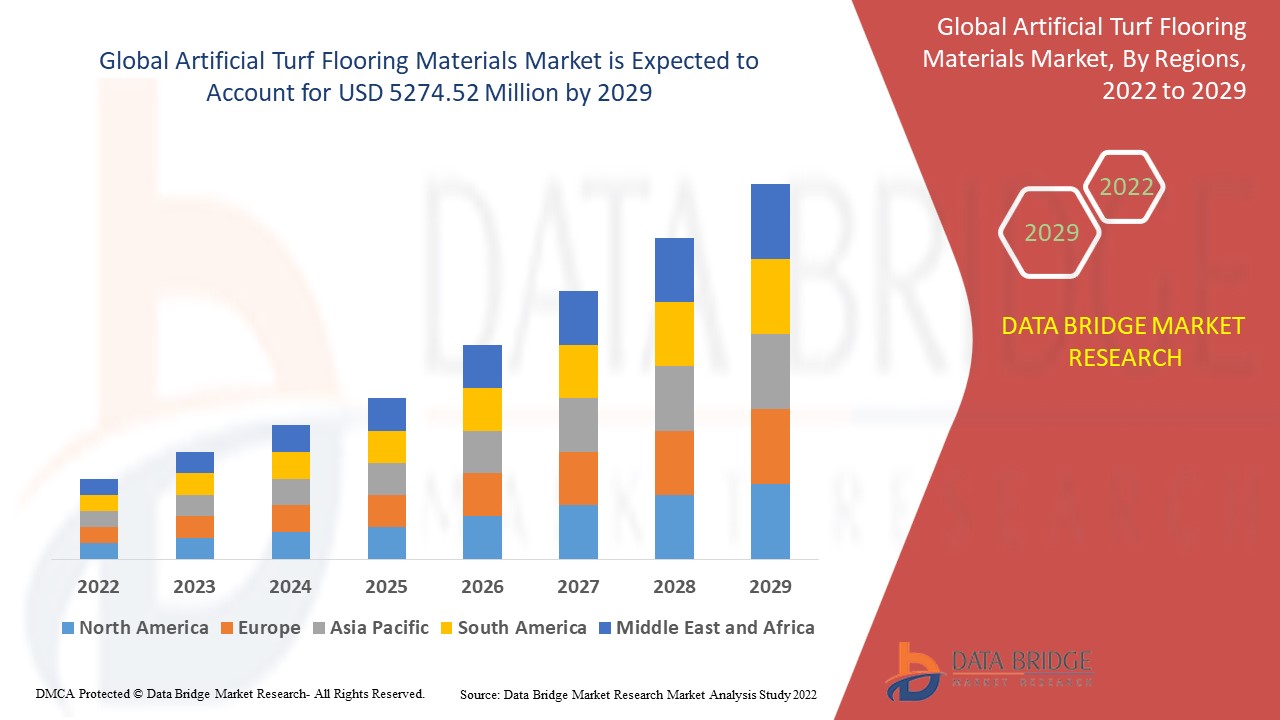
Global artificial turf flooring materials market was valued at USD 3570.00 million in 2021 and is expected to reach USD 5274.52 million by 2029, registering a CAGR of 5.00% during the forecast period of 2022-2029.
Artificial Turf Flooring Materials Market research report is a verified and consistent source of information that puts forth a telescopic view of the existing market trends, emerging products, situations and opportunities. This information holds an immense significance to drive business towards the success. The industry report comprises of explicit and up to date information about the consumer’s demands, their likings, and their variable preferences about particular product. Artificial Turf Flooring Materials Market report all-inclusively guesstimates general market conditions, the growth scenario in the market, likely restrictions, major industry trends, market size, market share, sales volume and future trends.
Extremely talented minds have put in their lot of time for doing market research analysis and structure an all inclusive Artificial Turf Flooring Materials Market Furthermore, the report gives insights into revenue growth and sustainability initiative. This global market report includes all the company profiles of the major players and brands. This report endows clients with the information on their business scenario which aids to stay ahead of competition in today's swiftly revolutionizing business environment. The Artificial Turf Flooring Materials Market industry is anticipated to witness growth during the forecast period due to growing demand at the end user level.
Analyze top trends and market forces impacting the Artificial Turf Flooring Materials Market. Full report ready for download:https://www.databridgemarketresearch.com/reports/global-artificial-turf-flooring-materials-market
Current Scenario of the Artificial Turf Flooring Materials Market
The artificial turf flooring materials market is experiencing a paradigm shift in terms of material preferences due to changing consumer demands and technological advancements. Manufacturers are increasingly focusing on developing innovative materials that offer enhanced durability, aesthetics, and sustainability. For instance, there is a growing trend towards the use of eco-friendly materials in artificial turf, driven by increasing environmental concerns and regulations promoting sustainable practices. This shift is likely to drive the development of artificial turf materials made from recycled or bio-based polymers, offering a more sustainable and environmentally friendly alternative to traditional materials.
In addition, the market is witnessing a rising demand for customization and personalization in artificial turf flooring materials. Homeowners, commercial property owners, and sports facility managers are increasingly looking for unique and customized solutions that meet their specific requirements in terms of design, performance, and maintenance. This trend is prompting manufacturers to invest in advanced technologies such as digital printing and surface treatments to offer a wide range of colors, patterns, and textures in artificial turf materials. Customized artificial turf solutions not only enhance the aesthetic appeal of spaces but also provide functional benefits such as improved durability, safety, and performance.
Furthermore, the market is witnessing a growing emphasis on the integration of smart technologies in artificial turf flooring materials. Smart artificial turf solutions incorporate sensors, IoT devices, and data analytics capabilities to monitor various parameters such as usage patterns, maintenance needs, and environmental conditions. These technologies enable real-time monitoring and management of artificial turf surfaces, ensuring optimal performance, safety, and longevity. Smart artificial turf solutions are gaining traction in sports facilities, commercial spaces, and public areas where efficient maintenance and performance tracking are crucial.
Moreover, the increasing adoption of artificial turf in landscaping and urban development projects is reshaping the market dynamics. Artificial turf offers several advantages over natural grass, including lower maintenance costs, reduced water consumption, and year-round usability. As cities and municipalities focus on enhancing green spaces, reducing water usage, and promoting sustainable practices, artificial turf is becoming a preferred choice for parks, playgrounds, rooftops, and streetscapes. The versatility and adaptability of artificial turf materials make them ideal for diverse landscaping applications, contributing to the overall growth of the market.
Overall, the artificial turf flooring materials market is evolving rapidly to meet the evolving needs and preferences of consumers across residential, commercial, and sports sectors. Manufacturers are innovating to develop sustainable, customizable, and technologically advanced materials that offer superior performance, aesthetics, and environmental benefits. With increasing investments, partnerships, and product developments, the market is poised for continued growth and expansion in the coming years.An interesting trend in the artificial turf flooring materials market is the increasing focus on sustainable and eco-friendly materials driven by changing consumer preferences and regulatory pressures. Manufacturers are shifting towards developing artificial turf materials made from recycled or bio-based polymers to offer a more environmentally friendly alternative. This shift aligns with the rising environmental concerns and the push towards sustainable practices, especially in the construction and landscaping sectors. By adopting eco-friendly materials, manufacturers not only cater to the growing demand for sustainable solutions but also contribute to reducing the environmental impact of artificial turf production and disposal.
Another significant development in the market is the surge in demand for customization and personalization in artificial turf flooring materials. Consumers in the residential, commercial, and sports sectors are increasingly looking for unique and tailored solutions that align with their specific design preferences, performance requirements, and maintenance needs. This shift towards customization has prompted manufacturers to invest in advanced technologies like digital printing and surface treatments to offer a wide range of colors, patterns, and textures in artificial turf materials. Customized solutions not only enhance the aesthetic appeal of spaces but also deliver functional benefits such as improved durability, safety, and performance, thereby catering to the diverse needs of end-users.
Moreover, the integration of smart technologies in artificial turf materials is emerging as a key trend shaping the market landscape. Smart artificial turf solutions, equipped with sensors, IoT devices, and data analytics capabilities, are revolutionizing the way artificial turf surfaces are monitored and managed. By capturing real-time data on usage patterns, maintenance requirements, and environmental conditions, smart turf solutions enable efficient maintenance, optimal performance, and enhanced safety in sports facilities, commercial spaces, and public areas. The adoption of smart technologies in artificial turf not only improves operational efficiency but also ensures long-term sustainability and performance of the installed surfaces, demonstrating the market's embrace of cutting-edge innovations to meet evolving demands.