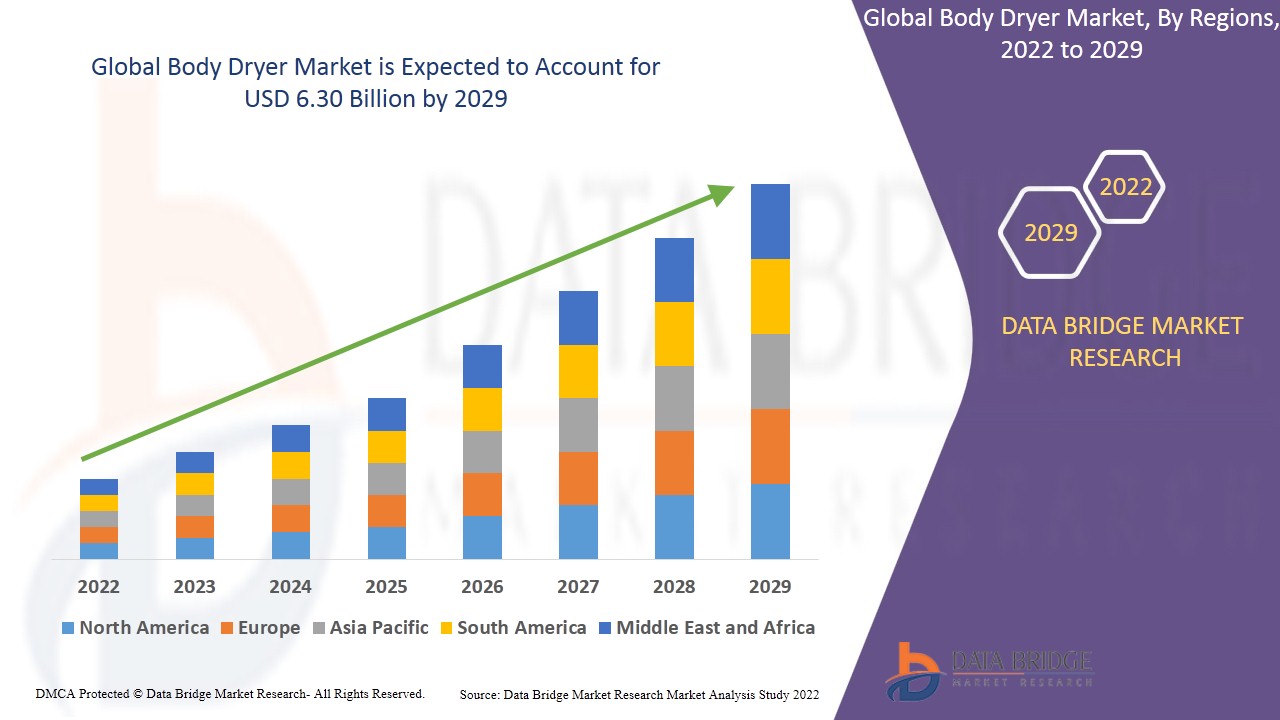
The Body Dryer Market is emerging as an innovative segment in the wellness and hygiene industry, offering a sustainable, touch-free alternative to traditional towels. Valued at nearly USD 3.4 billion in 2022, the market is projected to reach USD 6.1 billion by 2030, registering a CAGR of 7.5% from 2023–2030.
Body dryers, installed in homes, spas, gyms, hotels, and healthcare facilities, are designed to blow warm air that dries the body efficiently after bathing. With growing awareness about personal hygiene, energy efficiency, and reduced water and fabric waste, the demand for advanced drying solutions is steadily rising across the globe.
The Global Body Dryer Market is gaining traction due to multiple factors:
Touch-free hygiene – Eliminating towel sharing reduces bacterial spread.
Eco-friendly solution – Reduces laundry loads, saving water, detergents, and electricity.
Convenience & accessibility – Ideal for elderly and disabled populations who face challenges with towels.
Integration in smart homes – Body dryers are increasingly featured in luxury bathrooms and wellness spaces.
This convergence of hygiene, sustainability, and technological innovation is positioning body dryers as an essential addition in both residential and commercial settings.
Rising awareness about infection control, particularly after global health crises, has boosted demand for contactless drying methods.
Hotels, luxury resorts, spas, and gyms are increasingly adopting body dryers to enhance customer experience.
Consumers are becoming eco-conscious, seeking alternatives that reduce water, detergent, and fabric waste associated with towels.
Body dryers provide independence and safety, reducing the risk of slips and falls.