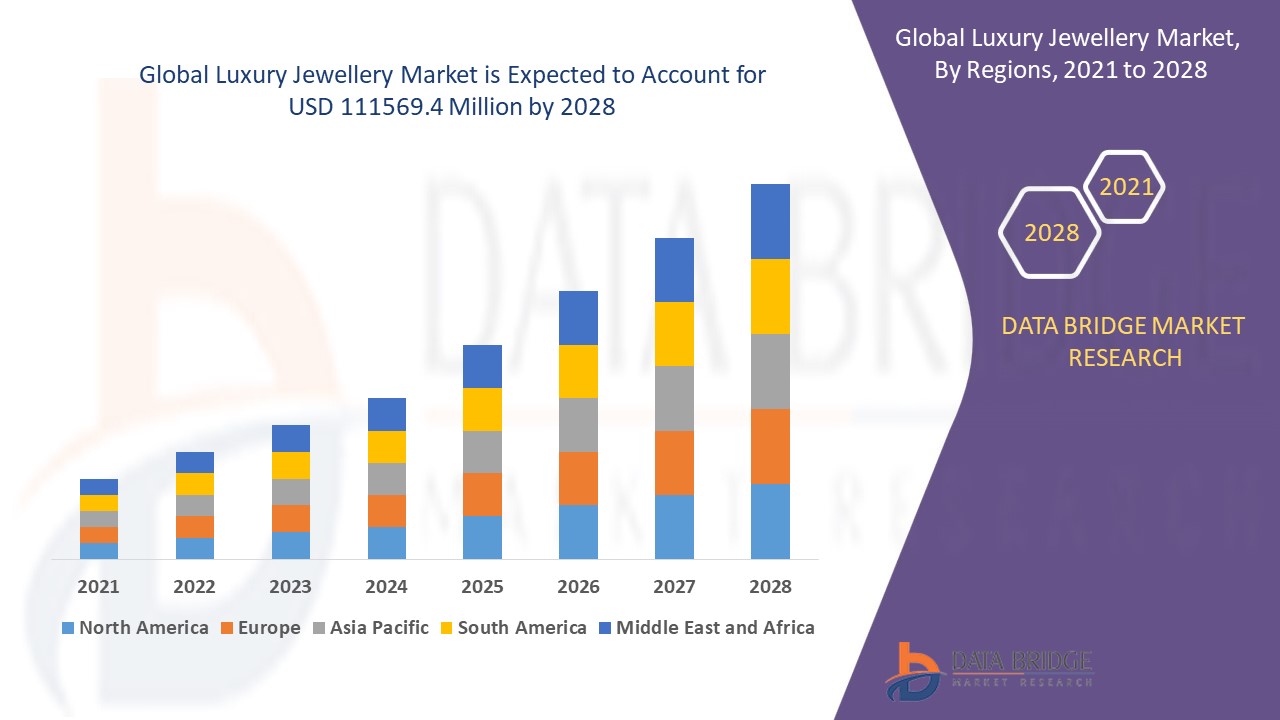
The global luxury jewellery market has long been a symbol of wealth, status, and refined craftsmanship. Beyond adornment, luxury jewellery carries emotional significance, often associated with milestones such as engagements, weddings, and anniversaries. This market represents the intersection of artistry and investment, appealing to high-net-worth individuals, fashion enthusiasts, and collectors worldwide. With evolving consumer tastes, expanding retail channels, and innovations in design and materials, the luxury jewellery industry continues to adapt while preserving its heritage. The luxury jewellery market is expected to be growing at a growth rate of 6.00% in the forecast period of 2021 to 2028.
The global luxury jewellery market has shown resilience despite economic fluctuations, supported by strong demand in both developed and emerging economies. Growth is driven by rising disposable incomes, cultural traditions, and consumer aspirations for exclusivity. The market encompasses high-value products such as diamond jewellery, gold ornaments, platinum pieces, and luxury watches, each contributing to its expansive growth.
The increasing popularity of branded jewellery is reshaping the market landscape. Consumers are shifting from unbranded items to established luxury labels that assure authenticity, superior design, and long-term value. Digital transformation has further enhanced accessibility, with e-commerce platforms enabling global reach and personalized shopping experiences.
Rising global wealth, particularly among millennials and Gen Z, is fueling demand for luxury jewellery. Younger consumers are increasingly investing in premium products that reflect individuality, social status, and sustainability values.
Another key driver is the growing role of luxury jewellery as an investment asset. Precious metals and gemstones not only hold aesthetic value but also act as stores of wealth, making them attractive during periods of economic uncertainty.
Cultural and social traditions continue to play a significant role. In countries such as India and China, gold and diamond jewellery are integral to weddings and festivals, ensuring consistent demand. Similarly, in Western markets, luxury jewellery purchases are linked to life milestones and gifting occasions.
Sustainability and ethical sourcing have become major growth enablers. Consumers are increasingly concerned about the origins of diamonds and gold, prompting brands to adopt traceability systems, conflict-free certifications, and eco-friendly production methods.
The luxury jewellery market faces challenges such as fluctuating prices of precious metals and gemstones, which can affect production costs and consumer demand. Economic downturns and geopolitical uncertainties may also reduce discretionary spending on luxury items.
Counterfeit products pose another challenge, undermining brand reputation and consumer trust. With the rise of online marketplaces, the risk of imitation goods entering the supply chain has increased, requiring stronger authentication systems.
Shifts in consumer behavior, especially the growing preference for experiences over material goods, may also impact long-term demand. Luxury jewellery brands must balance tradition with modern expectations to stay relevant.
The luxury jewellery market can be segmented by product type, material, distribution channel, and end-user.
By product type, the market includes necklaces, rings, earrings, bracelets, and watches. Rings and necklaces dominate due to their cultural and ceremonial significance, while luxury watches remain a symbol of prestige and functionality.
By material, the market is segmented into gold, diamond, platinum, silver, and others such as colored gemstones and pearls. Gold continues to hold a strong share, while diamond jewellery appeals to premium buyers seeking exclusivity. Platinum and rare gemstones are growing in popularity among affluent consumers looking for uniqueness.
By distribution channel, luxury jewellery is sold through offline retail stores, exclusive brand boutiques, department stores, and online platforms. While offline channels remain dominant, online retail is gaining momentum due to convenience, personalization, and digital authentication technologies.
By end-user, the market caters to both men and women. Women remain the primary consumers; however, men’s luxury jewellery, including watches, rings, and bracelets, is witnessing rising demand as fashion and lifestyle trends evolve.