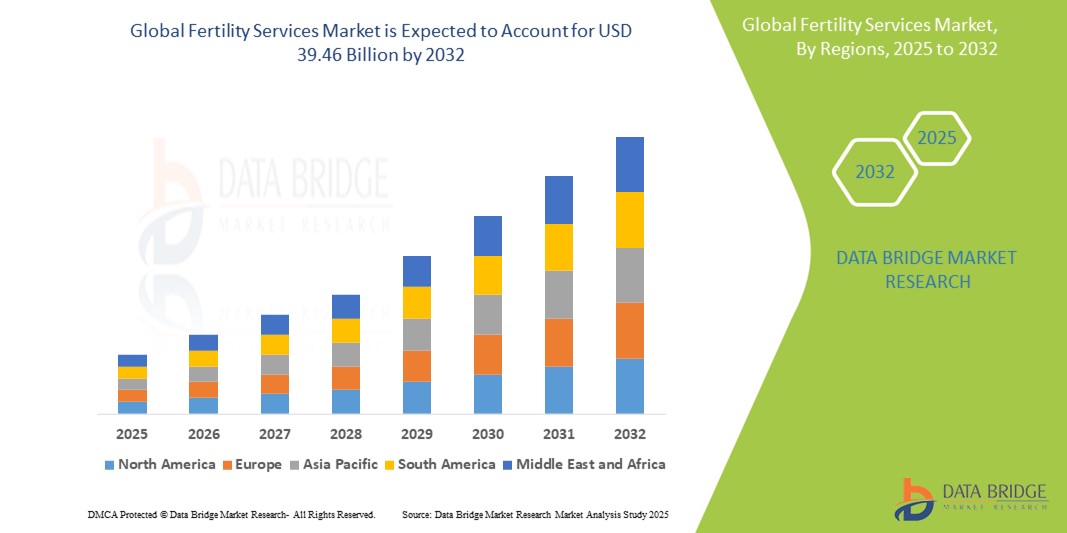
The Fertility Services Market is witnessing robust expansion as rising infertility rates, lifestyle changes, and delayed parenthood drive demand for advanced reproductive treatments. With the growing acceptance of assisted reproductive technologies, fertility clinics and healthcare providers are experiencing a surge in demand for specialized services. The market is projected to grow at a CAGR of around 9% to 11% during the forecast period, reaching a valuation of more than USD 50 billion. Increasing awareness, technological advancements, and supportive regulatory frameworks are further fueling the market’s growth potential.
The Fertility Services Market is shaped by multiple factors influencing its trajectory. One of the key drivers is the rising incidence of infertility worldwide, largely linked to stress, lifestyle disorders, obesity, and delayed family planning. As couples seek solutions, demand for in-vitro fertilization (IVF), intracytoplasmic sperm injection (ICSI), and egg freezing services is expanding rapidly. Another growth driver is the increasing acceptance of fertility treatments among same-sex couples and single parents, which is broadening the consumer base.
Despite the positive outlook, the market faces challenges such as the high cost of treatments, limited insurance coverage in many regions, and emotional as well as physical burdens associated with fertility procedures. Ethical concerns and regulatory restrictions in certain countries also pose obstacles. However, opportunities are emerging in the form of technological innovations, rising healthcare investments, and expanding fertility preservation services for cancer patients and working women who wish to delay childbearing.
The Fertility Services Market is segmented by treatment type, application, and end-user.
By treatment type, the market includes in-vitro fertilization, artificial insemination, surrogacy, fertility preservation, and other assisted reproductive technologies. IVF remains the dominant segment due to its high success rate and wide adoption across fertility clinics. Fertility preservation, particularly egg and sperm freezing, is also growing significantly as more individuals plan pregnancies later in life.
By application, the market covers male infertility, female infertility, and unexplained infertility cases. While female infertility treatments hold a larger share, male infertility services are gaining attention due to increasing awareness and diagnostic advancements.
By end-user, fertility clinics represent the largest share of the market, followed by hospitals and other medical centers. Dedicated fertility centers are expanding their reach with state-of-the-art laboratories and personalized treatment plans, driving competition and accessibility.
Regionally, the Fertility Services Market demonstrates strong growth across North America, Europe, Asia-Pacific, the Middle East and Africa, and South America.
North America leads the market, with the United States at the forefront due to advanced healthcare infrastructure, high awareness, and supportive regulatory policies. Insurance coverage for certain fertility procedures in select states is further boosting demand.
Europe is another major region, with countries such as the UK, Germany, France, and Spain offering strong adoption of IVF and related services. Favorable reimbursement policies and rising investments in fertility clinics contribute to the region’s prominence.
Asia-Pacific is emerging as the fastest-growing market. Rising disposable incomes, increasing medical tourism, and expanding awareness of reproductive health are driving demand in countries like India, China, Japan, and Australia. The region is also benefiting from the availability of cost-effective treatment options compared to Western countries.
The Middle East and Africa are gradually adopting fertility services, supported by rising healthcare investments and increasing demand from affluent populations. South America, particularly Brazil and Argentina, is witnessing steady growth, fueled by expanding private healthcare facilities and increasing awareness.
The Fertility Services Market is highly competitive, with global players and regional specialists striving to strengthen their positions. Key players focus on partnerships, acquisitions, and technological innovation to expand their service offerings and improve treatment success rates. Many companies are investing in advanced laboratory equipment, artificial intelligence for embryo selection, and genetic screening techniques to enhance outcomes.
Market share is fragmented, with leading fertility chains operating multiple clinics across regions while smaller, specialized clinics cater to localized demand. Continuous research into improving success rates and reducing treatment costs remains a central strategy for market participants.